"A two on the sides" is the most useful sentence in a barbershop and the most misunderstood. The number names the guard clipped onto the clippers, and the guard sets how much hair remains, measured in eighths of an inch. A number 1 leaves about an eighth of an inch, a 2 leaves a quarter inch, a 4 leaves half an inch, and an 8 leaves a full inch. At Landry's Barber Shoppe in Gastonia, half of every consultation is translating those numbers into what a client will actually see in the mirror.
Use this checklist in order. Check what number you have been asking for, what it really leaves, and how your hair type changes the reading, and you will stop getting the cut that is shorter or longer than the one in your head.
The numbers themselves
Guards run from 0, no guard at all and hair cut to the skin, up through 8 at one inch. Half sizes exist too, and barbers also use the clipper lever, which nudges a guard's length up or down by roughly half a size for blending. That lever is how a fade moves smoothly from a 1 to a 2 without a visible step: the barber works the lever through the in-between lengths.
Two warnings belong with the chart in your head. First, the same number reads differently on different heads, covered below. Second, a number describes length, not a style. "A 2 on the sides" plus nothing about the top, the fade height, or the neckline is half an instruction, and the missing half is where surprises come from.
Guard-number checklist, in order
- Know your current number. Pass: you can state the guard used on your sides last cut. Fail: you describe it as "short." Ask the barber to tell you before you leave, and note it.
- Check the reading on your hair color. Pass: you account for contrast. Dark hair at a 2 shows more scalp contrast than light hair at a 2, so the same number looks shorter on dark hair.
- Check density. Pass: fine or thinning hair gets a longer guard for the same coverage. Fail: copying a thick-haired friend's number and wondering why yours shows skin.
- Check the lever and blend. Pass: lengths graduate with no shelf line a week later. Fail: a visible step between two numbers, which means the in-between work was skipped.
- Separate sides from top. Pass: the top has its own instruction, in inches or scissor terms. Fail: one number expected to describe the whole head.
- Check grow-out plans. Pass: the number matches your return interval; a 1 grows out visibly in two weeks. Fail: skin-short sides on a six-week schedule.

Why the same number looks different on you
Three variables bend the reading. Hair color sets contrast: the greater the difference between hair and scalp tones, the shorter any length appears. Curl changes effective length, because curly hair cut to a quarter inch springs up and reads shorter and tighter than straight hair at the same measurement. Growth direction tilts strands flat or upright; hair that lies flat covers more at a given length than hair that stands.
This is why guard numbers are a starting point for a conversation rather than a specification sheet. A barber who knows your head adjusts a half size without being asked. A new barber needs one visit to calibrate, which is a reason to mention how the last cut read once it grew in, not just what number produced it.
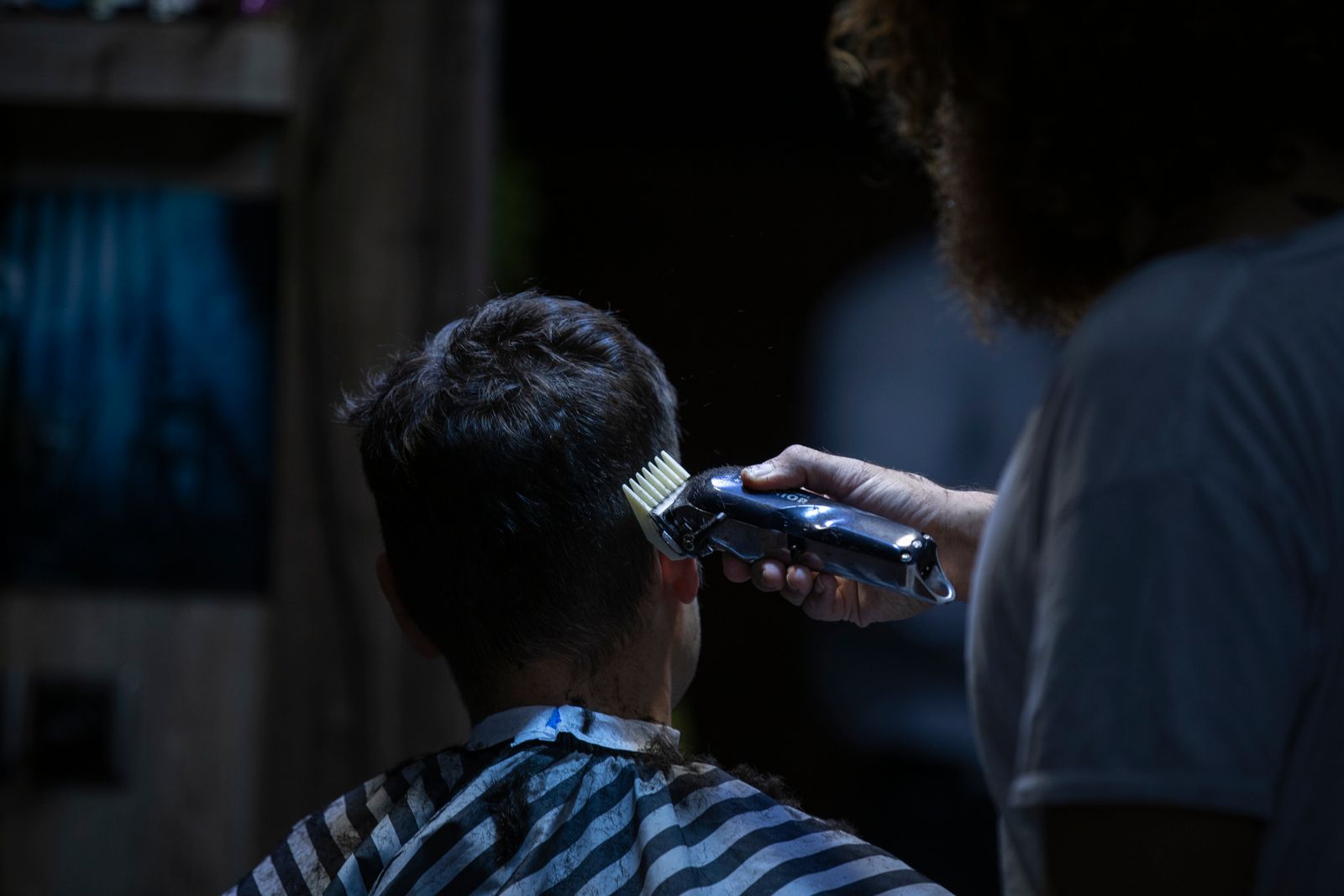
Talking in numbers at your next Gastonia visit
The complete sentence sounds like this: a 2 on the sides, faded up, scissors on top leaving about two inches, tapered at the neckline. Every element can be adjusted, but every element exists. If you do not know your numbers yet, the fix takes one visit: ask the barber at the end what was used where, and save it in your phone. Landry's clients who keep that note get the same cut from any chair in the shop, which is the real point of the numbering system.
Common questions
What does a 2 on the sides actually mean in inches?
A number 2 guard leaves about a quarter inch of hair. A 1 leaves an eighth, a 4 leaves half an inch, and an 8 leaves a full inch.
Is a 0 the same as a skin fade?
Close. A 0 cuts to stubble length with no guard; a skin fade works down to bare skin, often finished with a foil shaver or razor for a true skin result.
Why did my usual number look shorter this summer?
Likely scalp contrast. A tan changes the contrast between skin and hair, and sun-lightened hair reads thinner. The guard did the same thing; the reading changed.
Photos in this guide are representative stock images.
← All guides from Landry's Barber Shoppe← Back to Landry's Barber Shoppe