A beard leaves the shop shaped and returns six weeks later as a rumor of that shape. Between those points is the cadence problem: beard hair grows about half an inch a month on average, edges blur within two weeks, and the neckline most men set for themselves creeps a little lower or higher with every home trim. At Landry's Barber Shoppe in Gastonia, beard trims are a core service precisely because home maintenance works for a while and then quietly does not.
The comparison that matters is not barber versus home. It is which tasks belong at home on a weekly rhythm and which belong in the chair on a monthly one. The table draws that line.
Home upkeep versus chair work
| Task | At home | At the barber | Rhythm |
|---|---|---|---|
| Neckline cleanup | Yes, if the line was set professionally first | Sets or resets the line | Home weekly; reset every visit |
| Cheek lines | Light cleanup of strays only | Defines the line's height and angle | Home as needed; defined monthly |
| Overall length and shape | Risky freehand; small errors compound | Yes, with guards and a plan for the shape | Every three to five weeks |
| Mustache over the lip | Yes, with small scissors, dry and combed down | Shaped with the trim | Home weekly |
| Stray and wiry hairs | Trim them flush; never pluck | Blended during the trim | As they appear |
| Bulk under the jaw | The usual home mistake is over-thinning it | Yes, shaped to the jawline | Every visit |
The neckline rule, once and for all
The most common home-trim failure is a neckline set too high, up onto the jaw, which makes a beard look like a strap and the face above it larger. The standard rule places the line where the neck meets the head, roughly a finger or two above the Adam's apple, following the curve under the jaw. A practical way to find it: tilt your head down slightly, place two fingers above the Adam's apple, and the line belongs around the top finger, curving up toward the ears.
When in doubt, leave the line lower than instinct suggests. Hair below a too-low line can be cleaned up; a line carved too high has to grow back, and that takes weeks of looking slightly wrong. This asymmetry is the whole argument for letting a barber set the line first and maintaining it afterward.
A cadence that fits real growth
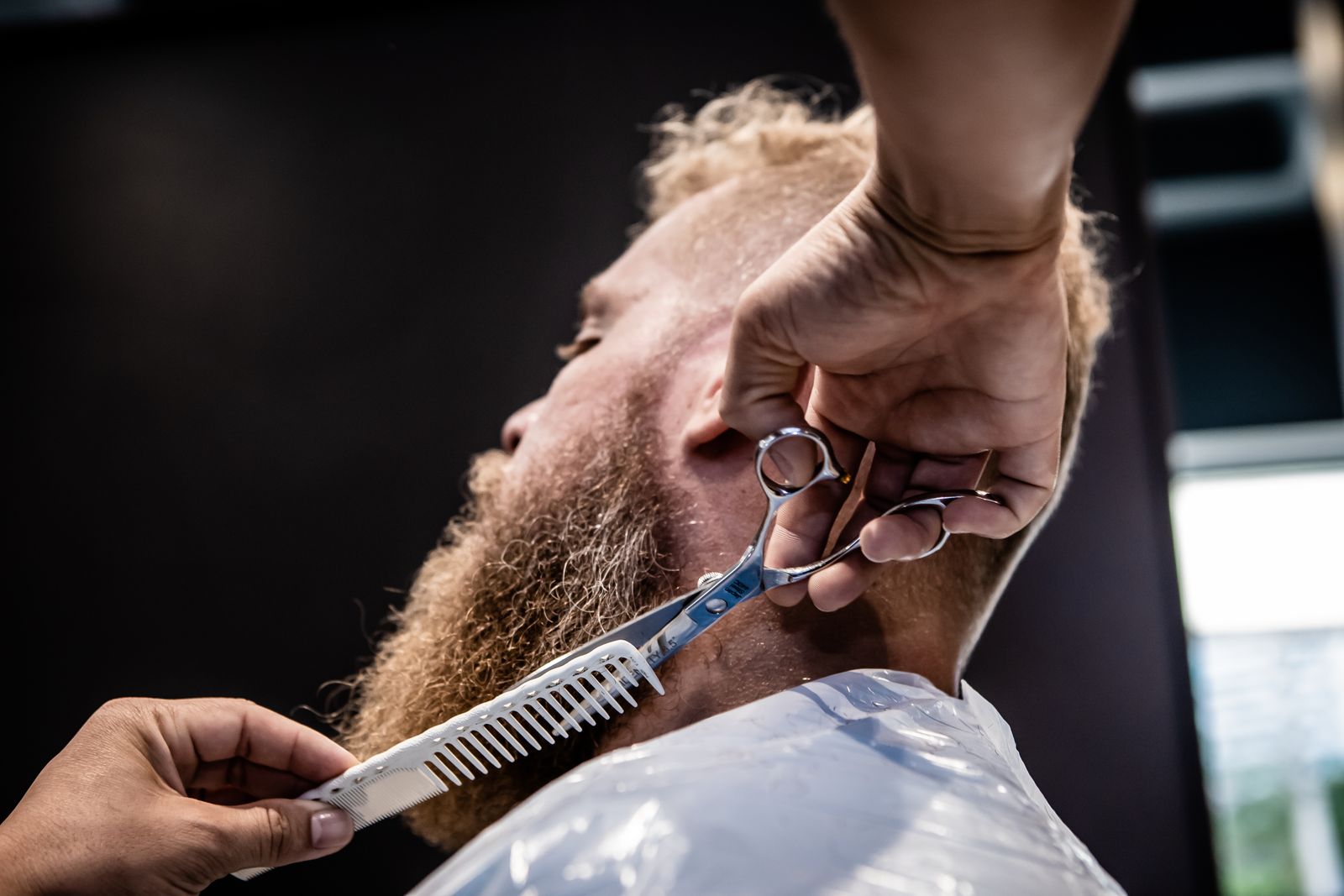
For most beards the working rhythm is this: a professional trim every three to five weeks, a ten-minute home tidy once a week, and nothing at all on the other days. The weekly tidy covers the mustache edge, strays outside the cheek lines, and any neckline fuzz below the established line. The professional visit resets shape, length, and both lines, and corrects the small drifts that weekly tidying introduces.
Fast growers and short, shaped beards sit at the three-week end, because precision shapes show growth sooner. Longer beards forgive five weeks, since length hides edge drift, though the under-jaw bulk still needs the chair on schedule. In Gastonia's humid summers, add one habit: rinse the beard after heavy sweat days. Skin under a beard in July gets irritated quietly, and a flaky, itchy base makes any beard look worse than its shape deserves.

Where home trimming goes wrong
Three errors repeat. Trimming a wet beard, which dries shorter and springs up, so the result is always shorter than intended. Chasing symmetry side to side until too much is gone; beards are siblings, not twins, and a millimeter of difference is invisible on a face. And trimming in poor light at midnight before an event, which combines every risk at once. Dry hair, good light, a small amount at a time, and a hard rule to stop after one pass over each area will prevent nearly all of it.
Washing fits into the cadence as well. A beard collects the day, and in summer that day includes sweat and sunscreen. Rinse it daily, wash it properly a few times a week with a gentle cleanser, and work in a small amount of beard oil or plain conditioner while it is damp. Hydrated beard hair lies flatter, trims more predictably, and holds the shape your cadence is maintaining instead of springing out of it.
Common questions
How fast does a beard actually grow?
About half an inch per month on average, though it varies by person and by area of the face. That is why edges blur in about two weeks even when length looks fine.
How often should I get a professional beard trim?
Every three to five weeks for most men. Short, precise shapes need the three-week end; longer beards can stretch to five with weekly home tidying.
Should I trim my beard wet or dry?
Dry, and combed into its normal position. Wet beard hair hangs longer and straighter, so a wet trim almost always ends up shorter than planned once it dries.
Photos in this guide are representative stock images.
← All guides from Landry's Barber Shoppe← Back to Landry's Barber Shoppe